
The Local Intelligence Playbook: Using Your Competitors' Reviews Against Them
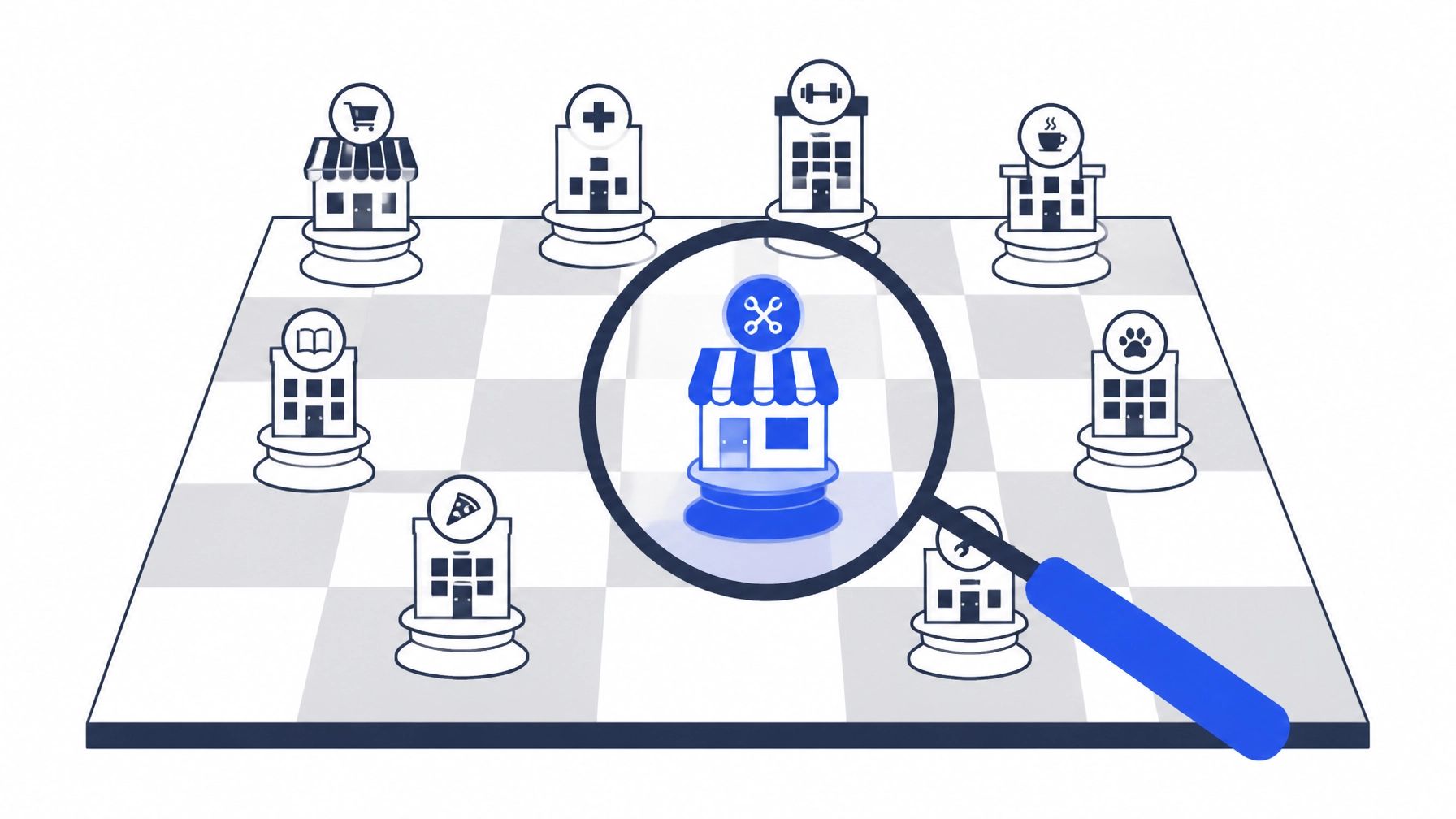
Most business owners look at their competitors' reviews with a bit of envy or a quick eye-roll. If a rival has 500 five-star reviews, it feels like a mountain you’ll never climb. If they have a string of one-star disasters, it’s a moment of private satisfaction.
But if you’re only looking at the number of stars, you’re missing the most valuable data in your local market.
Your competitors’ reviews are essentially a free, public, and constantly updated focus group. They are a roadmap of exactly what your local customers want, what they hate, and: most importantly: where they are being let down.
In this playbook, we’re going to show you how to stop looking at reviews as a popularity contest and start using them as "local intelligence" to steal market share.
1. Finding Your Real Local Rivals
Before you can mine data, you need to know who you’re actually competing with. It’s rarely just the shop two doors down. In the world of local search, your real competitors are the ones appearing in the "Local 3-Pack": those top three results on Google Maps.
Take a moment to search for your primary service (e.g., “emergency plumber Bristol” or “unisex hair salon Manchester”). These are your search competitors.
Look at the businesses that are outranking you. Don't just look at their overall score. Check their "Review Velocity": how often are they getting new feedback? If they haven’t had a review in three months, they are vulnerable. If they are getting five a week, you know the pace you need to match to catch them.
2. Mining the "Anti-Pitch": Turning Negatives into USPs
This is where the strategy gets interesting. Every negative review your competitor receives is a gap in the market.
If you spend twenty minutes reading the 1-star and 2-star reviews of the top three businesses in your area, you will start to see patterns. These patterns are the "pain points" of your local customers.
Common patterns often look like this: * The Communication Gap: "They never answer the phone," or "I waited three days for a quote." * The Reliability Gap: "They said they’d be here at 9 am and turned up at 1 pm." * The Pricing Gap: "I was shocked by the final bill; it wasn't what was discussed."
Once you identify a pattern, you don’t just feel smug: you change your marketing. If your main rival is known for being slow to respond, you make "Quotes within 2 hours" the headline of your website. If they are known for being messy, you add a "We leave your home spotless" guarantee to your Google Business Profile.

By doing this, you aren't just saying you’re "good." You are positioning yourself as the specific solution to the problems people are already having with your competitors.
3. Stealing Their "Language" for SEO
Keywords aren't just technical terms like "dentist" or "gym." The most powerful keywords are the ones your customers actually use when they describe their experience.
Read your competitors' five-star reviews. What words keep coming up? * Do they talk about the "atmosphere"? * Do they mention that the staff are "patient with children"? * Do they praise the "painless" experience?
These are the emotional triggers that convince people to book. You should weave these exact phrases into your own website copy, your service descriptions, and your automated review requests. When a potential customer visits your profile and sees the same positive language they were looking for, the "trust" box is instantly ticked.
4. The UK Platform Audit: Where Are They Hiding?
In the UK, Google isn't the only game in town. Depending on your industry, your competitors might be leaning heavily on specific platforms.
- Tradespeople: Are they dominating Checkatrade or TrustATrader?
- Hospitality: Is their TripAdvisor score higher than their Google score?
- Professional Services: Are they collecting reviews on Yell or Trustpilot?
If a competitor has 100 reviews on Trustpilot but only 5 on Google, they’ve left the "front door" (Google Maps) wide open for you. By focusing your efforts on the platform they’ve ignored, you can quickly become the dominant force in local search results while they’re busy elsewhere.
5. Turning "Review Mining" into an Action Plan
Analysing all this data manually is time-consuming. Most local business owners don't have three hours a week to sit and read through hundreds of rival comments.
This is where automation helps. Using a platform like YourReviews allows you to see your standing in the market at a glance. Instead of guessing, you can see exactly how your rating compares to the local average and track your progress in real-time.
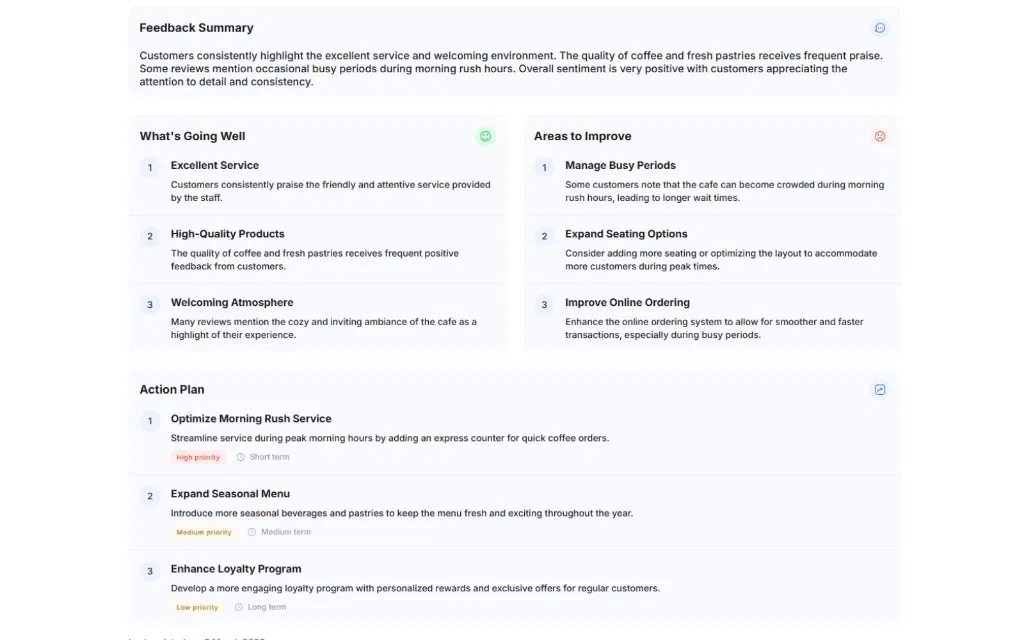
The goal is to create a "feedback loop." You find a weakness in a competitor, you fix that issue in your own business, you highlight it in your marketing, and then you use automated requests to get your customers to confirm that you’ve solved it.
When your reviews start saying, "I tried [Competitor] and they were a nightmare, but these guys were on time and professional," you’ve won. That is the most powerful marketing you can ever have.
6. Staying Impartial and Ethical
A final word of advice: use this data to improve your business, not to attack theirs.
Never leave fake negative reviews for a competitor. It’s unethical, it’s against the terms of service of every platform, and in the UK, it can lead to legal issues. You don't need to pull them down; you just need to lift yourself up.
By being the business that listens to what the market is complaining about and offering a better alternative, you don't just get more reviews: you get more customers.
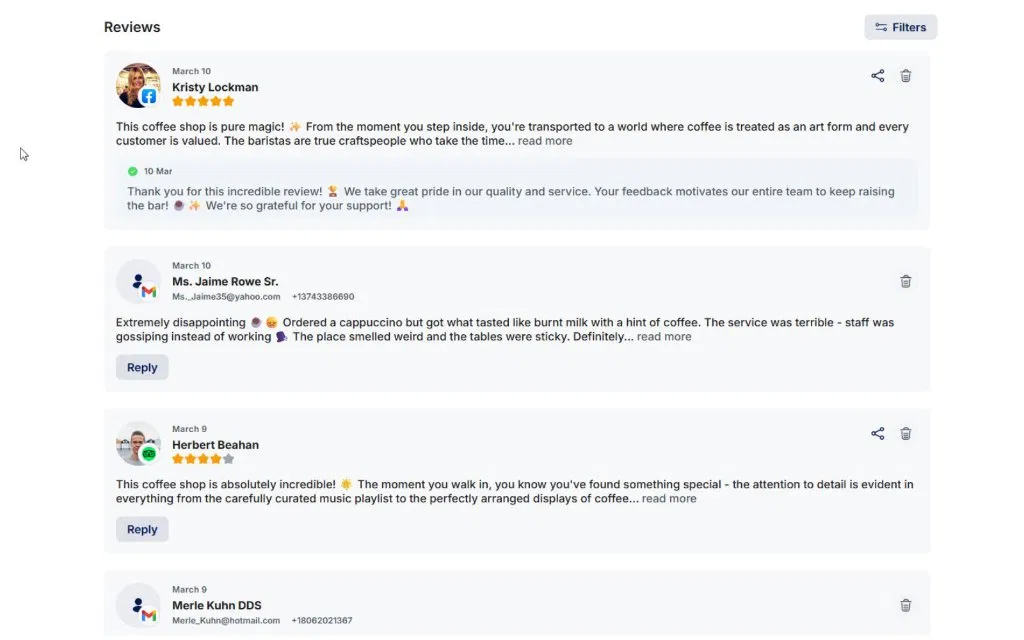
The local intelligence is right there, waiting for you to read it. Your competitors have already done the market research for you. Now, you just need to use it.