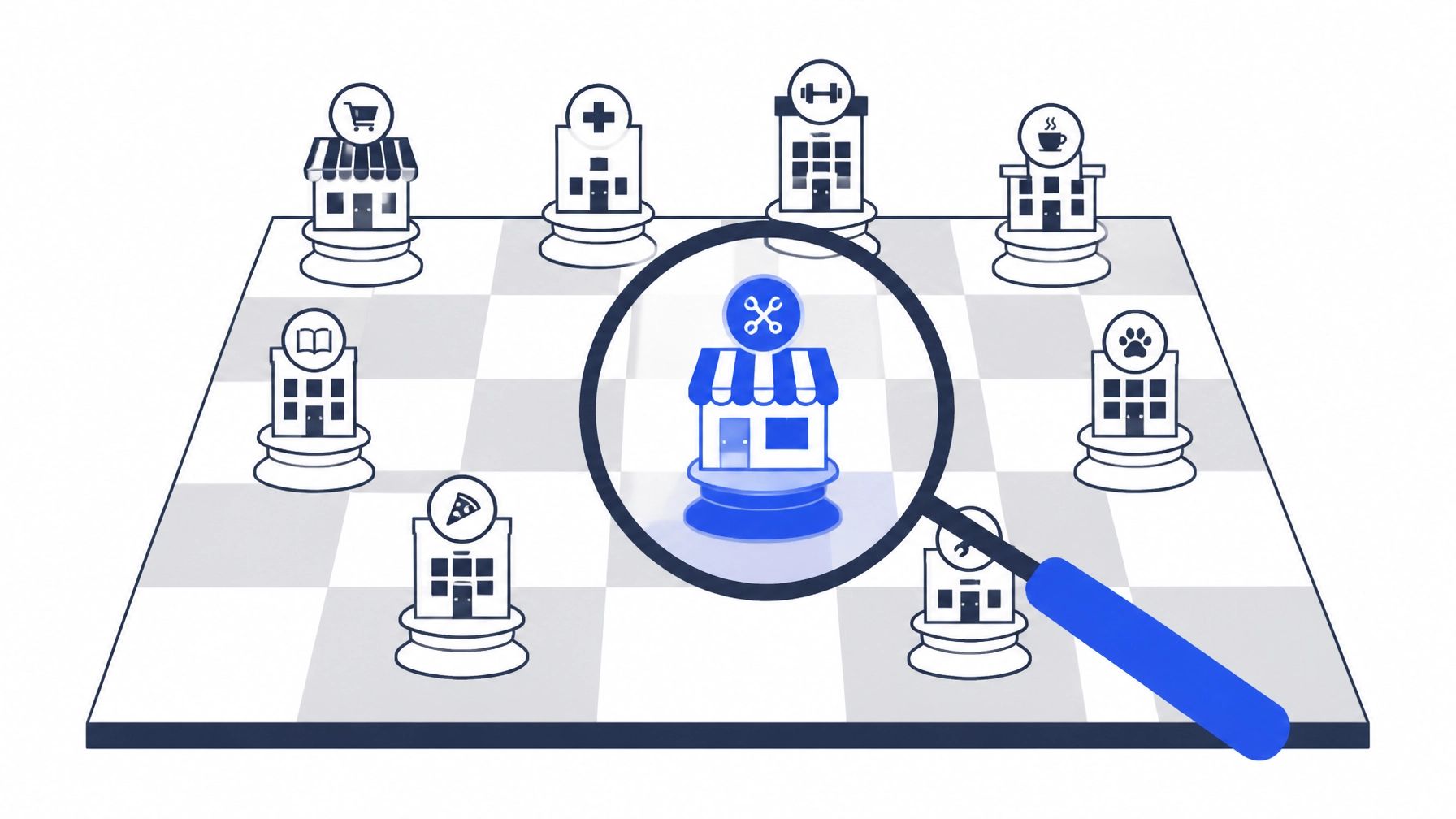
Google Maps Ranking: How Reviews Actually Move the Needle
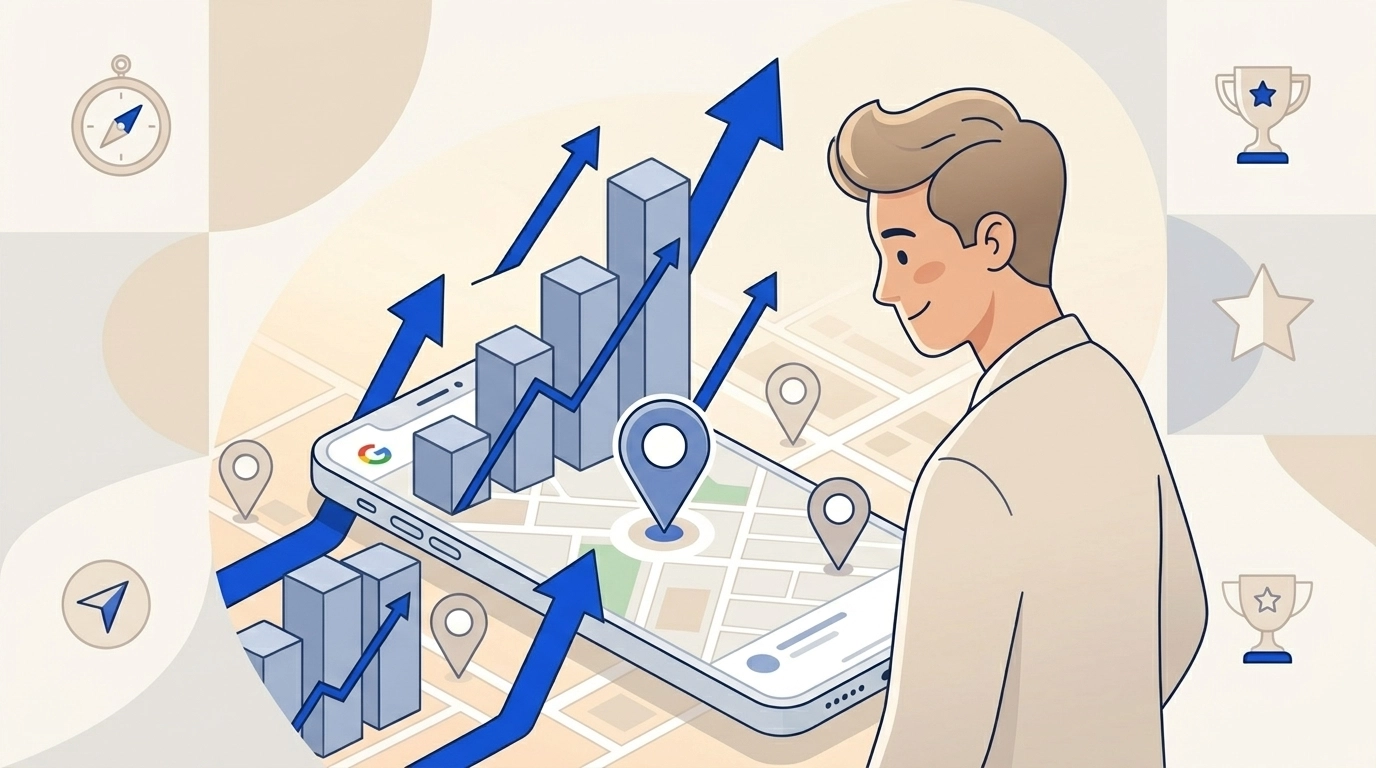
If you run a local business in the UK, you’ve likely spent more than a few minutes staring at the "Map Pack": that little box at the top of Google’s search results that shows three local businesses, their star ratings, and a map.
Getting into those top three spots isn't just a vanity project. It’s the difference between a phone that rings off the hook and a shop floor that stays quiet. But why do some businesses seem to own those spots while others, even those with decades of history, languish on page two?
The answer, more often than not, lies in your reviews. But it’s not just about having "good" reviews; it’s about how Google’s algorithm reads the specific signals your customers are sending. In this post, I want to pull back the curtain on how reviews actually move the needle for your Google Maps ranking and what you can do to optimise your profile.
What is Google Actually Looking For?
Google has a very specific goal: it wants to provide the searcher with the most relevant, trustworthy, and convenient result. To do this, it weighs three main pillars for local search: Relevance, Distance, and Prominence.
- Relevance: How well your business matches what the person is looking for.
- Distance: How far you are from the person searching (or the location they specified).
- Prominence: How well-known or important your business is in the real world.
While you can’t change how far a customer is from your front door, and you can only do so much to change your basic relevance, you have massive control over your Prominence. This is where reviews come into play. In fact, reviews account for roughly 10–15% of all local ranking factors. When you look specifically at "prominence," reviews make up about a third of that score.
The Impact of Review Velocity: Why Recency Beats Total Count
One of the biggest misconceptions I see is the idea that once you hit 100 or 200 reviews, you can "stop" and let the momentum carry you. In the eyes of Google, a review from 2022 is worth significantly less than a review from last Tuesday.
This is what we call Review Velocity. It’s the speed and frequency at which you receive new feedback.

Google’s algorithm loves "fresh" data. A steady stream of 4–8 new reviews every month tells Google that your business is active, popular, and currently providing a good service. If you have 500 reviews but haven't received a new one in six months, Google might start to wonder if you’re still in business or if your quality has dipped.
Increasing your review velocity is one of the fastest ways to climb the rankings. Moving from two reviews a month to six or seven can often jump your business up several positions in the Map Pack within just 30 days. This is why automation is so crucial. A simple, consistent review request process helps keep that "freshness" signal alive.
Quantity and the "Magic 10"
While velocity is king, quantity still sets the foundation. There are certain "thresholds" where Google seems to give a business a little extra nudge.
Data shows that a business moving from 9 reviews to 10 often sees a noticeable spike in visibility. It’s as if Google needs that tenth vote of confidence to decide you’re a "real" contender in the local area.
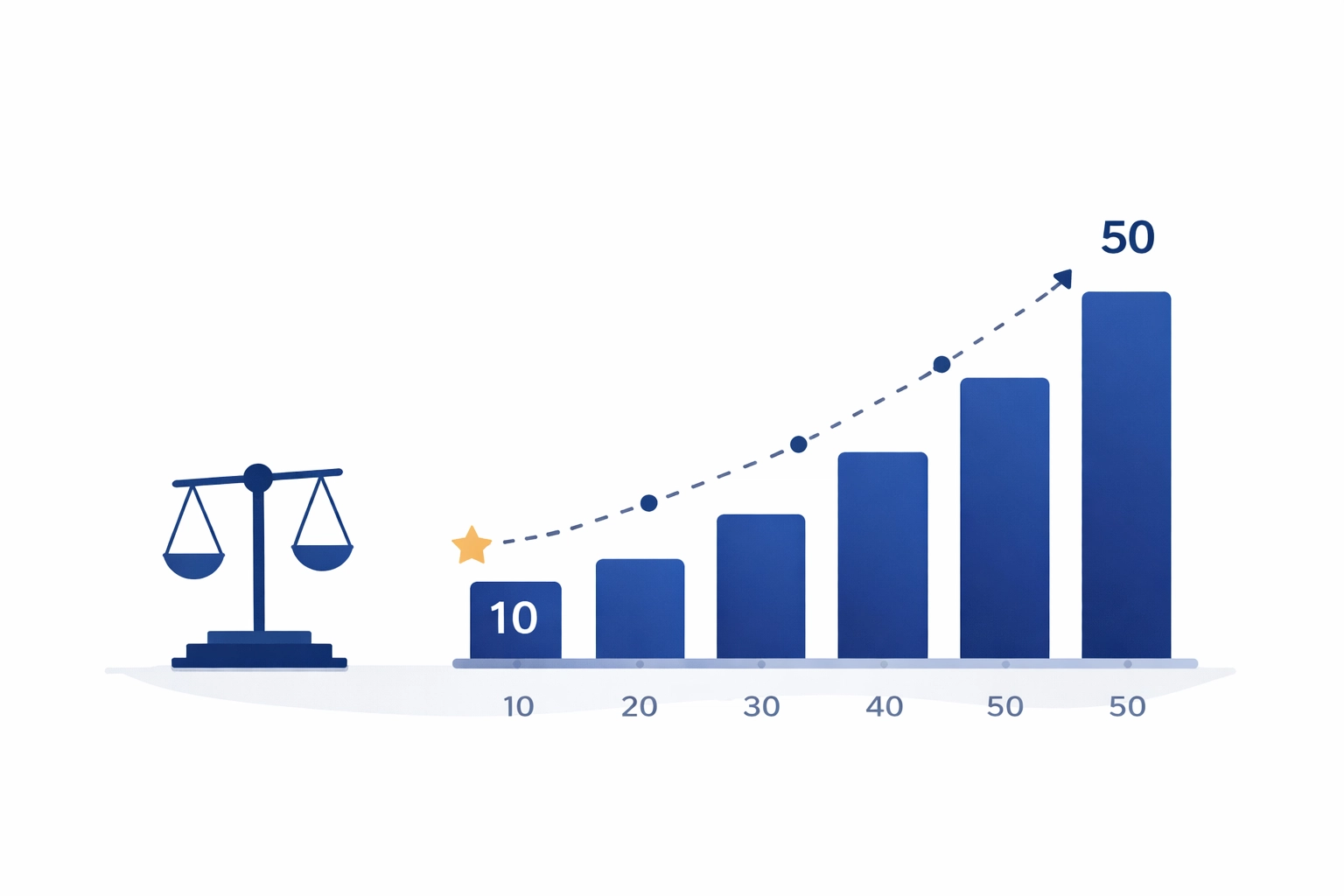
Once you pass that initial hurdle, the next goal for most UK small businesses is to outpace the local average. In most niches, the top-ranking businesses have an average of about 47 reviews. If your competitors have 30 and you have 60, you’re in a very strong position. Interestingly, once you pass 100 reviews, the ranking benefits start to level off slightly. At that point, it becomes less about the number and more about the content within those reviews.
Keywords: Let Your Customers Do the SEO
Most people think of SEO as something you do on your website: optimising headers, writing blogs, and tweaking metadata. But your customers are actually some of your best SEO copywriters.
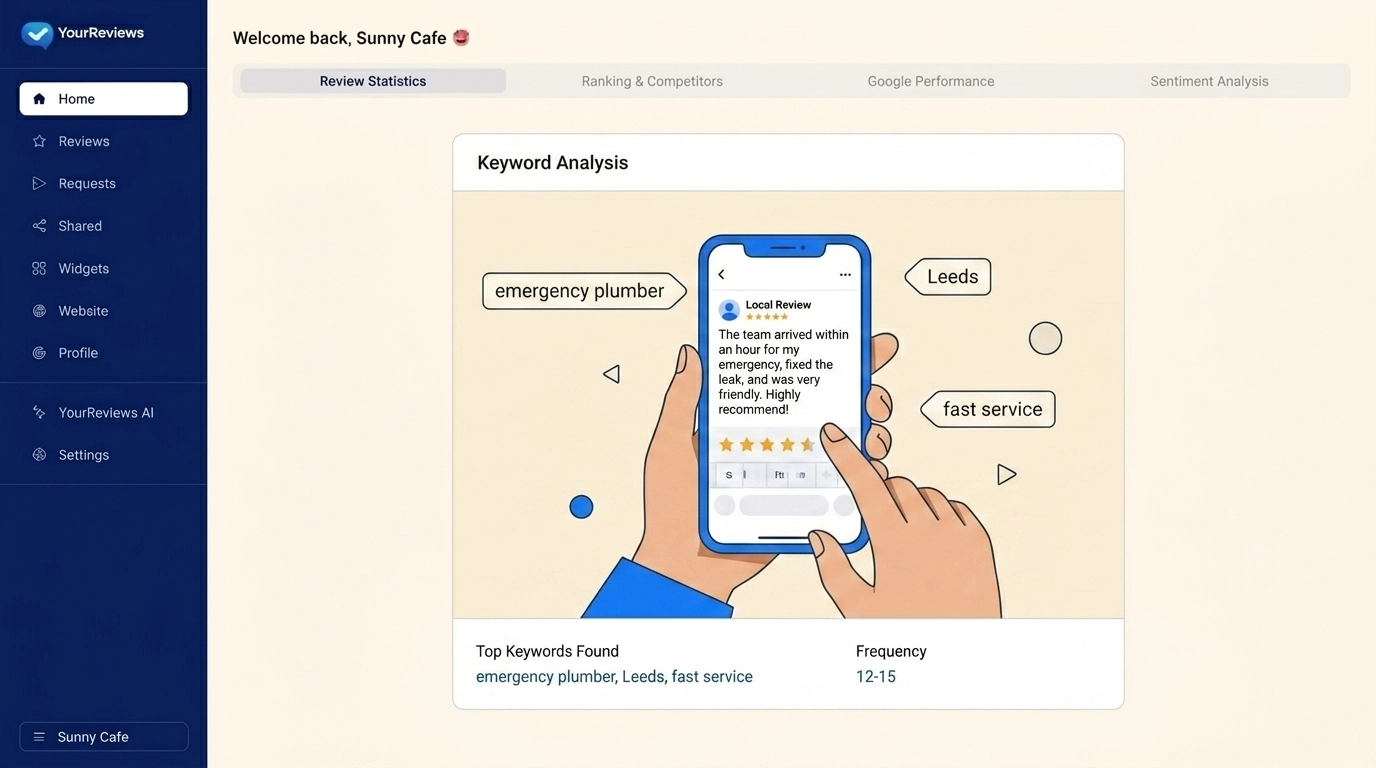
When a customer leaves a review that says, "Best sourdough bread in Bristol" or "Most reliable emergency plumber in Leeds," they are feeding Google's algorithm exactly what it needs to see. These are "keyword-rich" reviews.
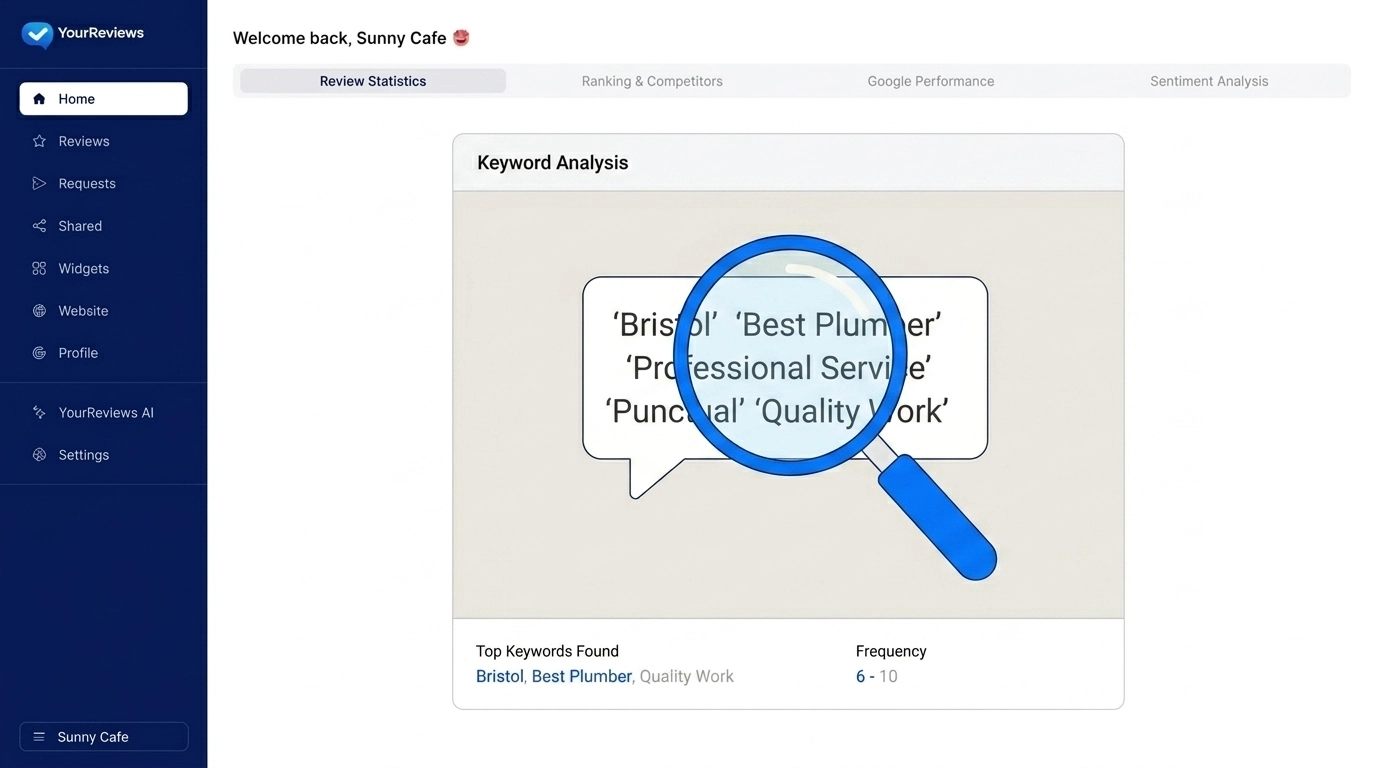
If your business is a cafe but your reviews constantly mention "best lattes" or "quiet workspace," Google will start ranking you higher for those specific searches, even if those words aren't all over your website.
About 70% of reviews are generic: things like "Great service!" or "Thanks!" While these are nice, they don't help your ranking much. Encouraging customers to mention what they bought or the specific service they received can have a massive impact. Keep an eye on your search data each month so you can spot which terms people are actually using to find you.
The Response Factor: Google Loves a Chatty Business
Google has explicitly stated that responding to reviews improves your local SEO. Why? Because it proves that you are an engaged business owner who cares about customer experience.
Responding to reviews is a "signal of activity." It tells the algorithm that the lights are on and someone is home. But let’s be honest: as a busy business owner, replying to every single "Great thanks!" can feel like a chore.

This is where AI has become a bit of a game-changer. By using AI-generated replies that maintain a professional tone, you can ensure 100% response rates without spending your Sunday evenings glued to a keyboard. Google doesn't penalise AI responses as long as they are relevant and helpful. The key is to ensure every reviewer feels heard, which in turn encourages more people to leave their own feedback, creating a "review flywheel."
Beyond Rankings: The Conversion Factor
It’s important to remember that ranking #1 on Google Maps is only half the battle. If you rank first but have a 3.2-star rating, people will simply scroll down to the business with a 4.8.
The "sweet spot" for trust is actually between 4.2 and 4.5 stars. Believe it or not, a perfect 5.0 can sometimes look a bit "too good to be true" to savvy consumers. They want to see that you're human. What matters most is how you handle the occasional 3-star review. A professional, calm response to a negative review can often be more persuasive to a new customer than a dozen five-star ones.
When you combine a high ranking with a high level of social proof, your "click-to-call" and "get directions" metrics skyrocket. It’s about building a reputation that precedes you.
Summary: Building Your Map Pack Strategy
To move the needle on your Google Maps ranking, you need to stop thinking of reviews as a "nice-to-have" and start seeing them as a core part of your local SEO strategy.
Focus on these four areas: 1. Velocity: Keep a steady pulse of new reviews coming in every single week. 2. Quantity: Aim to cross that "Magic 10" threshold quickly, then aim for 50+. 3. Keywords: Encourage customers to be specific about the services they enjoyed. 4. Engagement: Respond to every review, good or bad, to show Google you’re active.
Managing all of this manually is a tall order, especially when you’re busy actually running the business.
If you keep the process steady, stay responsive, and make it easy for customers to leave useful feedback, reviews can become one of the most reliable ways to improve your visibility on Google Maps over time.