Information Gain: The New Way Google is Judging Your Customer Reviews
For years, the gold standard for any local business was the five-star review. We spent our energy chasing the number, believing that a high average was the ultimate ticket to the top of the Google Maps pack. But as we move through 2026, the goalposts have shifted. While those five stars still matter, Google is now looking much deeper into the actual words your customers are writing.
A new concept, known as "Information Gain", has become a cornerstone of how search engines evaluate the quality of content, including the feedback left by your clients. If you’ve noticed your local search visibility 2026 shifting despite a steady stream of reviews, this hidden ranking factor is likely the culprit.
Understanding the "Information Gain" Concept
To understand Information Gain, you have to think like a search engine. Google’s job is to provide the most helpful, unique information to a user. If ten different websites all say the exact same thing about "how to fix a leaky tap", there is zero Information Gain for the user after reading the first one. The other nine are essentially redundant.
Google recently updated its core algorithms to prioritise content that adds something new to the conversation. This started with blog posts and articles, but it has now firmly landed in the world of local business reviews.
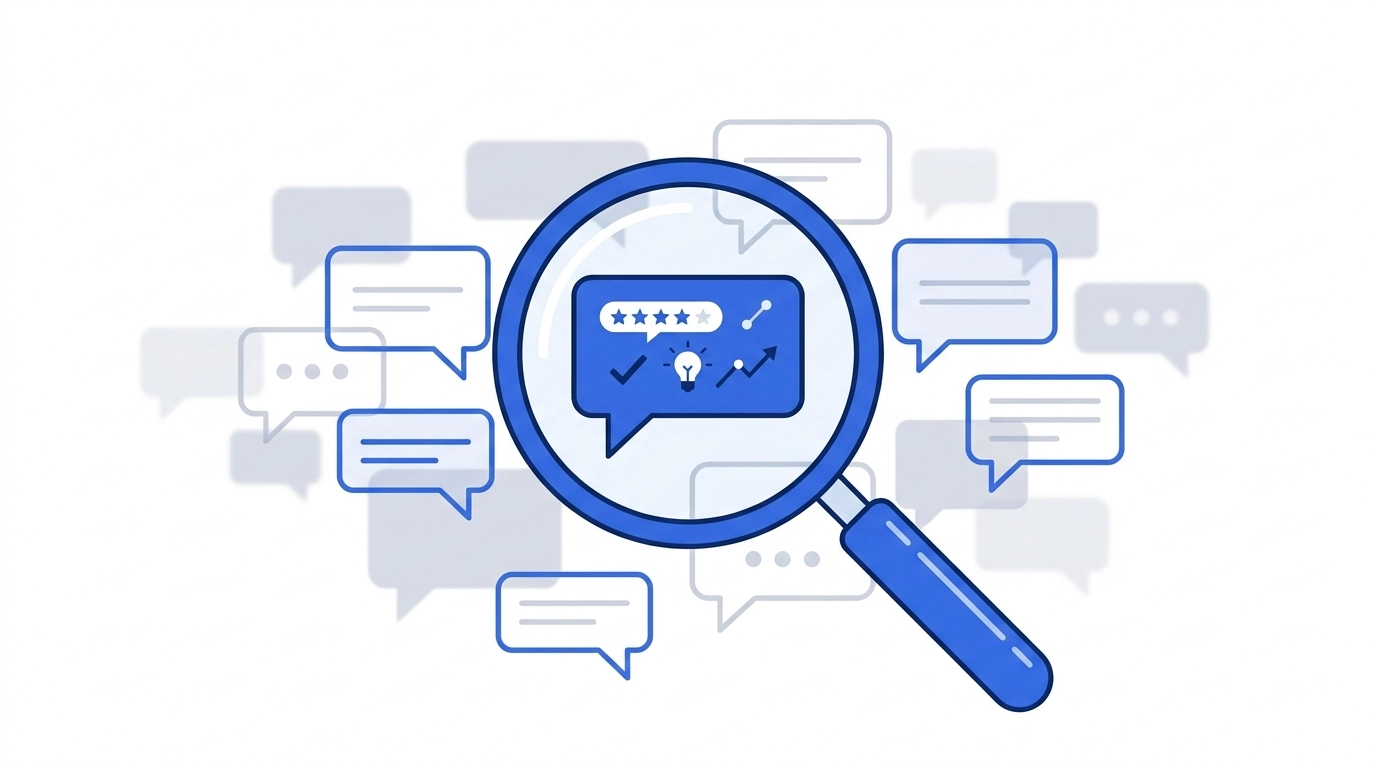
In the context of reviews, Information Gain is the measure of how much new knowledge a customer provides about your business that isn't already obvious or repetitive. A review that says "Great service, five stars!" provides almost zero Information Gain. A review that explains exactly how you solved a specific problem, what the atmosphere was like, or how a particular staff member helped them is a goldmine of information for Google’s AI.
Why Star Ratings Alone Are Losing Their Punch
We’ve reached a point of "review saturation". Most reputable local businesses in the UK now have hundreds, if not thousands, of reviews. When everyone has a 4.8-star rating, the rating itself ceases to be a useful differentiator for a search engine.
Google's AI, Gemini, is now sophisticated enough to read and categorise the sentiment and specific details within every single review. It isn't just looking for "positive" or "negative"; it's looking for "useful".
A business with 50 highly detailed, information-rich reviews will often outrank a competitor with 500 generic "excellent" reviews. This is because those 50 reviews provide a much clearer picture of what the business actually does, the quality of the work, and the specific niches they excel in. This clarity directly feeds into your local search visibility 2026, helping you appear for long-tail searches you might have previously missed.
The Local Search Visibility 2026 Landscape
The current local search environment is more competitive than ever. Google is moving away from simply listing businesses and towards providing "answers". When a user searches for "best dentist for nervous patients in Manchester", Google doesn't just look at the business name. It scans the reviews for the phrase "nervous patients" and looks for detailed accounts of why those patients felt comfortable.
This is where Information Gain becomes your secret weapon. By encouraging customers to share specific details, you are providing Google with the data it needs to recommend you for those highly specific, high-intent searches.
If your reviews are generic, you are effectively invisible for these specific queries. You might show up for a broad search like "dentist", but you'll lose out on the more profitable, targeted leads who know exactly what they need.
Practical Examples: Generic vs High-Information
Let’s look at how this plays out in the real world. Imagine two different reviews for a local kitchen fitter.
Review A (Low Information Gain): "Had a new kitchen fitted by Steve. Great job, very professional, would recommend."
This review is positive, but it tells Google almost nothing. It’s "thin content" in review form. It doesn't help anyone understand what kind of kitchen it was, what the challenges were, or what Steve’s particular skills are.
Review B (High Information Gain): "Steve fitted a bespoke shaker-style kitchen for us in an old Victorian terrace where the walls were nowhere near straight. He managed to scribe the panels perfectly around the original cornicing and even suggested a better layout for the island that saved us space. The quartz worktop fitting was seamless. Very tidy worker."
This review is a masterclass in Information Gain. It tells Google: * The business handles "bespoke shaker-style kitchens". * They have experience with "Victorian terraces" and "non-straight walls". * They can handle "original cornicing". * They offer design advice (the "island layout"). * They work with "quartz worktops".
Google now has five or six new "tags" to associate with this kitchen fitter. When someone nearby searches for "shaker kitchen Victorian house", Steve is going to be the top choice because a customer has provided the specific information gain Google was looking for.
How to Encourage "High-Information" Reviews
You can't force customers to write a novel, but you can certainly nudge them in the right direction. The key is in how you ask.
Instead of a generic "Please leave us a review", try asking specific questions based on the service they received. If you are a hair salon, you might ask: "We'd love to hear what you thought of your colour transformation today: did we get the tone exactly right?"
For a tradesperson, it might be: "Could you mention the specific project we worked on and how the finish turned out? It really helps other local homeowners find us."
The more specific your request, the more specific the response tends to be. Most customers actually want to be helpful; they just don't always know what information is useful. By providing a little guidance, you can significantly increase the "Information Gain" score of your profile.

Using Automation to Master the New System
As a business owner, you likely don't have the time to send personalised, probing questions to every single customer. This is where modern reputation management tools come in.
Platforms like YourReviews are designed to take the manual labour out of this process while maintaining that crucial human touch. By automating review requests via SMS or WhatsApp, you can ensure that every customer is prompted at the perfect moment: right when the experience is fresh in their mind.
What’s even more powerful is the ability to use AI to respond to these reviews. Google also looks at how you respond. If you use a generic "Thanks for the review" for every customer, you aren't adding any Information Gain yourself. However, if your responses are tailored to the specific details the customer mentioned, you are doubling down on those keywords and signals.
YourReviews uses AI to help draft these professional, specific replies that acknowledge the customer's unique experience, further signalling to Google that your business is an authority in your field.
The Future of Feedback
We are moving into an era where quality beats quantity every time. The businesses that will dominate local search in 2026 and beyond are those that treat their reviews as a rich data source, not just a popularity contest.
By focusing on Information Gain, you aren't just trying to "game" an algorithm. You are actually building a more trustworthy, transparent, and helpful presence online. You are helping potential customers make better decisions by giving them real, detailed insights into what it’s like to work with you.
In the end, that's exactly what Google wants, and it's what your future customers want, too. Start looking at your reviews not as a collection of stars, but as a collection of stories. The more detailed those stories are, the higher you’ll climb.