The 69% Zero-Click Trend: Why Your Google Profile is Now Your Actual Homepage
If you own a local business in the UK, you’ve likely spent years: and a fair bit of money: perfecting your website. You’ve tweaked the copy, obsessed over the "About Us" page, and made sure your gallery looks just right. But there is a shift happening in how people find you, and the data is a bit of a wake-up call.
As of early 2026, roughly 69% of searches end without a single click to a website. This is the "Zero-Click" trend, and it’s fundamentally changing the role of your digital presence. For most of your potential customers, your website is no longer the destination. It’s an optional extra.
The real destination? Your Google Business Profile (GBP).
What Exactly is a Zero-Click Search?
A zero-click search happens when someone looks for a service: say, "emergency plumber Southport" or "best hair salon near me": and finds every answer they need right there on the search results page.
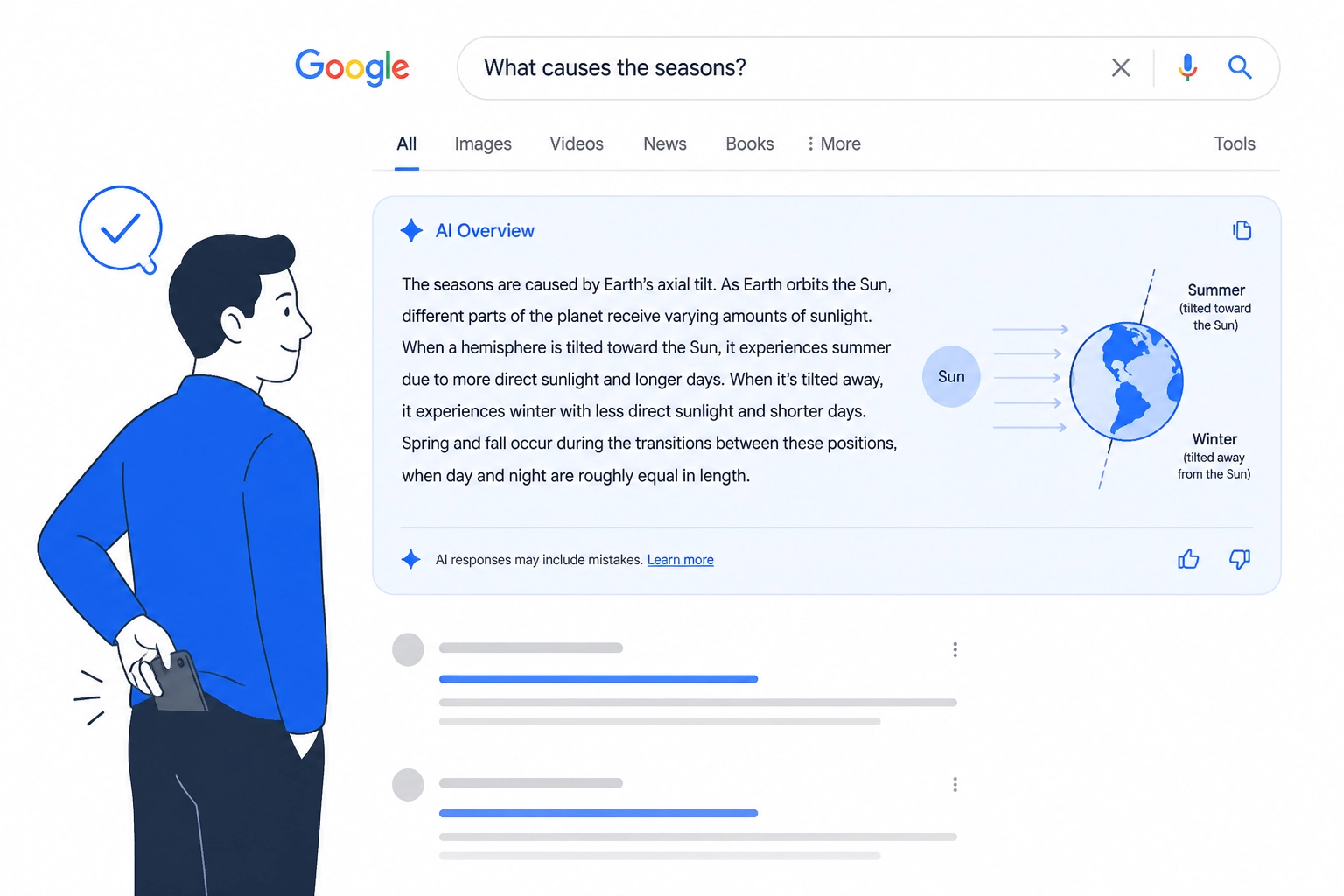
In the old days (which, in tech terms, was about three years ago), a user would see a list of blue links, click one, and head to a website to find a phone number or price list. Today, Google’s AI Overviews, Local Packs, and feature-rich business profiles mean the user never has to leave the search engine. They can check your opening hours, read your latest reviews, look at your price list, and even book an appointment without ever touching your actual homepage.
Why the Shift? The Rise of AI and the "Web Quality" Update
This isn't happening by accident. Back in March 2025, Google rolled out a massive "Web Quality" update that prioritised helpful, real-world information over thin, SEO-driven content. At the same time, AI Overviews (formerly known as SGE) became the standard for UK searches.
When a customer asks a question, Google’s AI now scours the web, summarises the best answer, and presents it at the very top of the page. If that answer includes your business’s reviews and contact details, the customer is satisfied. They’ve got what they wanted in five seconds.
For the business owner, this means that while your website traffic might be dipping, your visibility could actually be at an all-time high: provided your Google Business Profile is up to the task.
Your Google Profile: The "Actual" Homepage
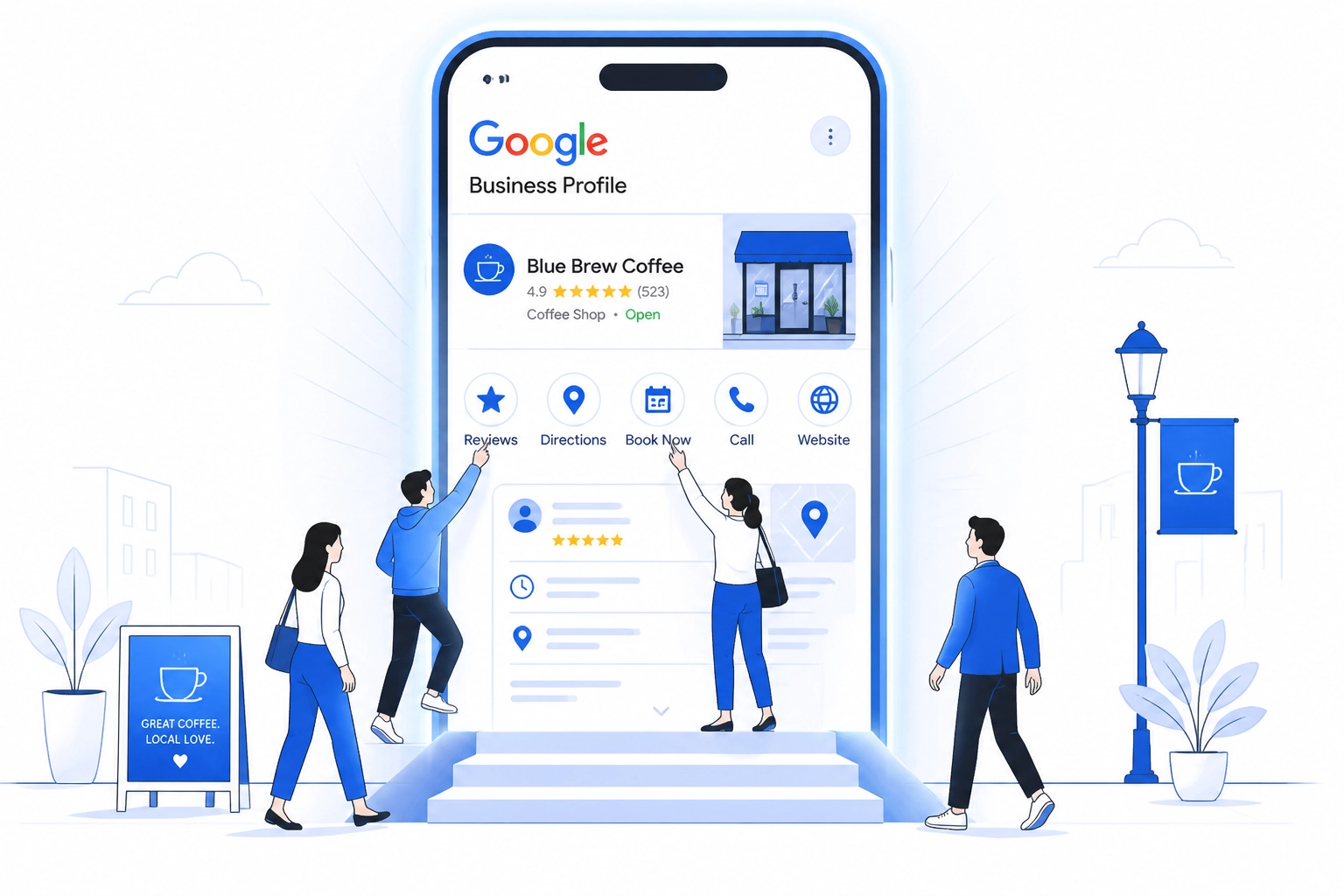
Think of your GBP not as a directory listing, but as your digital shopfront. In 2026, it serves all the functions your website used to:
- First Impressions: Your photos and star rating are the first things people see.
- Social Proof: Reviews are now displayed more prominently, with AI even summarising what customers commonly say about you.
- Customer Service: The Q&A section allows you to answer common queries before they’re even asked.
- Conversion: The "Call", "Directions", and "Book" buttons are the primary way local customers interact with you.
If your GBP is sparse, outdated, or lacks recent reviews, you’re essentially leaving your shopfront windows dirty while spending all your time decorating the back office (your website).
The Local Flywheel: Reviews as the New SEO
Since users aren't clicking through to read your blog posts as much as they used to, how does Google decide who to show in that coveted "Local Pack"?
The answer lies in engagement and reputation.
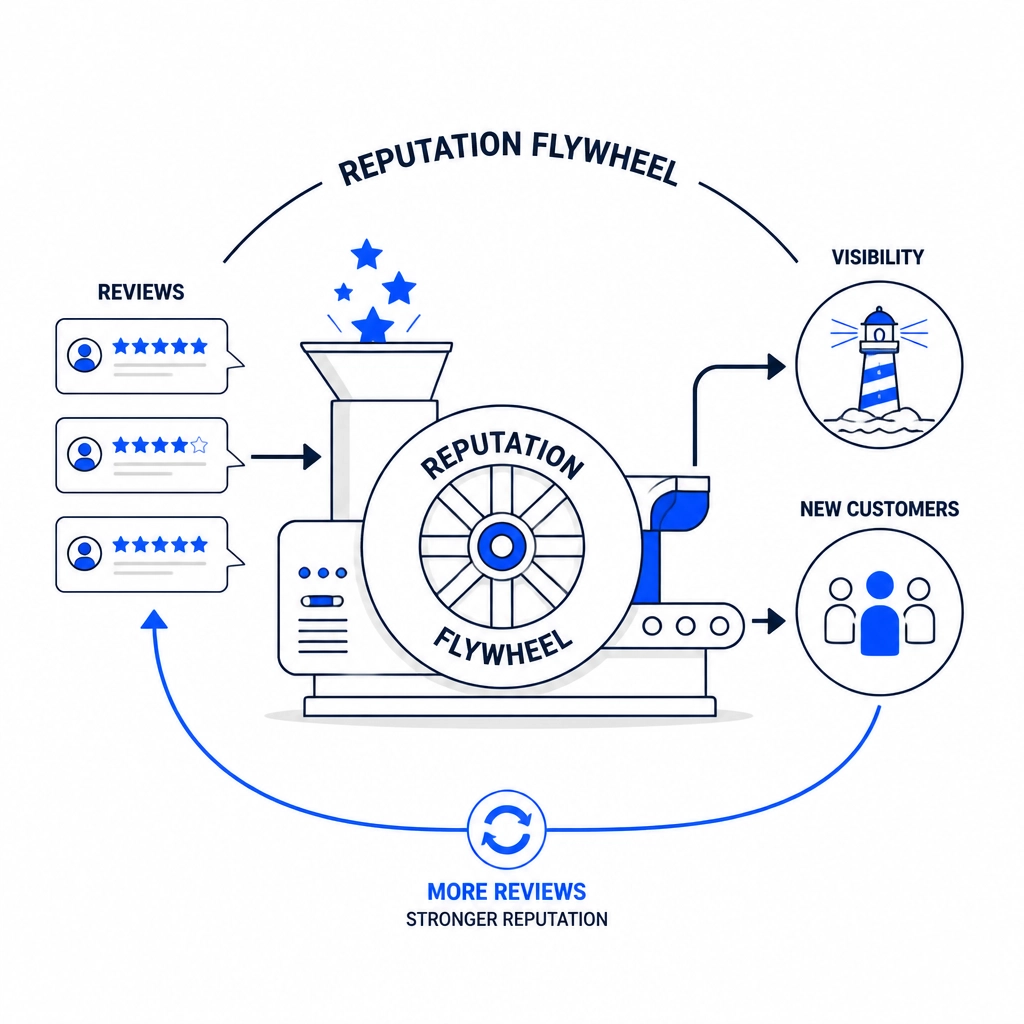
Google favours businesses that are active and trusted. This creates what we call the "Local Flywheel." It works like this: * You provide a great service. * You collect a fresh, high-quality review. * Google notices the activity and the positive sentiment. * Your profile gains visibility in the Local Pack and AI Overviews. * More customers find you (without clicking your website). * They leave more reviews, and the cycle continues.
At YourReviews, we’ve seen this first-hand. Businesses that automate their review collection: using SMS or WhatsApp to catch customers while the experience is fresh: tend to see a much faster climb in local rankings. It’s no longer about having the "best" SEO keywords; it’s about having the most consistent "reputation signals."
Practical Steps to Master the Zero-Click Reality
So, how do you ensure your business isn't left behind by the 69% who don't click? Here is a practical checklist for the modern UK business owner:
1. Prioritise "Freshness"
Google loves a profile that is alive. If your last review was from six months ago, you look like you might have closed down. Regularly updated photos (of your team, your work, or your premises) and frequent customer reviews tell Google that you are a reliable, active choice.
2. Answer Every Review (The AI Way)
Responding to reviews isn't just polite; it’s a ranking signal. It shows you’re engaged. However, we know that as a business owner, you don’t always have time to craft a unique response to every "Great service!" comment. Using AI-powered responses can help you maintain that professional engagement in the background, ensuring no customer feels ignored.
3. Maximise Your Attributes
Does your café have "Outdoor Seating"? Is your dental practice "Wheelchair Accessible"? These small tags, known as attributes, are often pulled directly into AI Overviews to answer specific user questions. Ensure every single attribute in your GBP dashboard is accurately filled out.
4. Use Reviews as Content
Since people aren't visiting your site to see your testimonials, bring the testimonials to them. Turning your best reviews into social media posts or using customisable website widgets ensures that even if a user does eventually click through to your site, they are immediately hit with the same high level of social proof they saw on Google.
A Shift in Mindset
The zero-click trend isn't something to fear; it’s an opportunity to simplify. For a local salon in Southport or a gym in Manchester, the goal remains the same: get the phone to ring or the door to open.
If Google wants to do the "selling" for you by showing off your 5-star rating and your beautiful portfolio photos right there on the search page, let it. Your job is simply to provide the "fuel": the reviews, the photos, and the accurate data: that Google needs to recommend you.
The "homepage" has moved. It’s time to move with it. By focusing on your reputation and automating the busy work of review management, you can ensure that when those 69% of users look for a service, your business is the one that stops their scroll.