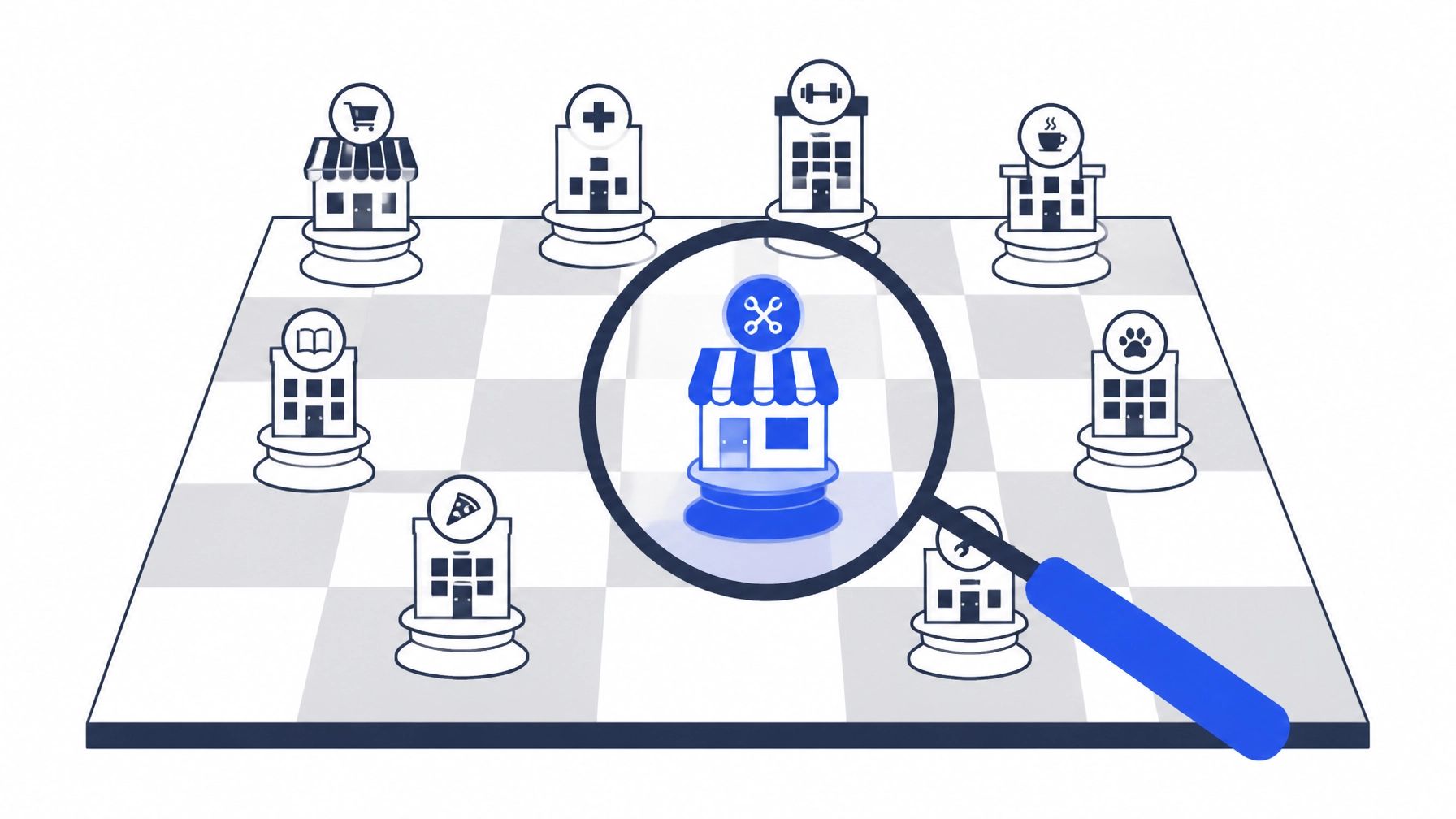
The 90-Day Trust Window: Why Fresh Reviews are More Valuable than Volume

For years, local business owners have been told the same thing: "Get more reviews." We’ve treated our total review count like a high score in a video game. We hit 100, then 500, then 1,000, and we think, "Right, that’s done. I’m the most trusted shop in town."
But here’s the reality in 2026: that number at the top of your Google Business Profile is becoming an ego metric.
While having a high volume of reviews is great for initial credibility, it’s no longer the primary factor that converts a "browser" into a "buyer." Today’s consumers are smarter, more cynical, and under more financial pressure than ever. They don't care what someone thought of your service in 2023. They want to know what happened last Tuesday.
This shift in behaviour has created what we call the 90-Day Trust Window. If your most recent review is older than three months, you’re effectively invisible to a huge portion of your potential market.
The Science of Recency: Why 74% of People are "Recency Snobs"
According to the latest 2026 Local Consumer Review Survey, a staggering 74% of consumers only value reviews from the past three months.
Think about that for a second. You could have 2,000 glowing five-star reviews, but if you haven’t received a new one since Christmas, three-quarters of your potential customers will look at your listing and think, "Is this place still open?" or "Has the management changed?"
In the industry, we call this Review Recency. In a post-pandemic, high-inflation world, businesses change fast. Menus change, staff leave, and quality fluctuates. Customers know this. They use recent reviews as a "pulse check" on your current performance. A review from 2024 is ancient history; it reflects a version of your business that might not exist anymore.
The 4.5-Star "Insurance Policy"
We also need to talk about the 2026 "economic anxiety" factor. People are being much more protective of their hard-earned cash. Because of this, the threshold for what counts as a "safe" business has skyrocketed.
In 2024, a 4.0-star rating was often "good enough." Today, it’s a warning sign. The percentage of consumers who require a 4.5-star rating or higher has jumped from 17% to 31% in just two years.
A 4.5+ star rating has become a form of "spending insurance." When a customer sees that high score, backed up by comments from just a few days ago, it reduces the perceived risk of their purchase. They aren’t just buying a meal, a haircut, or a boiler repair; they’re buying the certainty that they won’t be disappointed. If your rating slips even slightly, the impact is measurable: data suggests that every one-star decline can lead to a 5-10% loss in revenue.
Velocity vs. Volume: The Consistency Trap
Many businesses fall into the "burst" trap. They realise they need more reviews, so they run a big campaign for a month, harass every customer who walks through the door, and get 50 reviews in 30 days. Then, they stop.
The result? A big spike followed by a flatline.
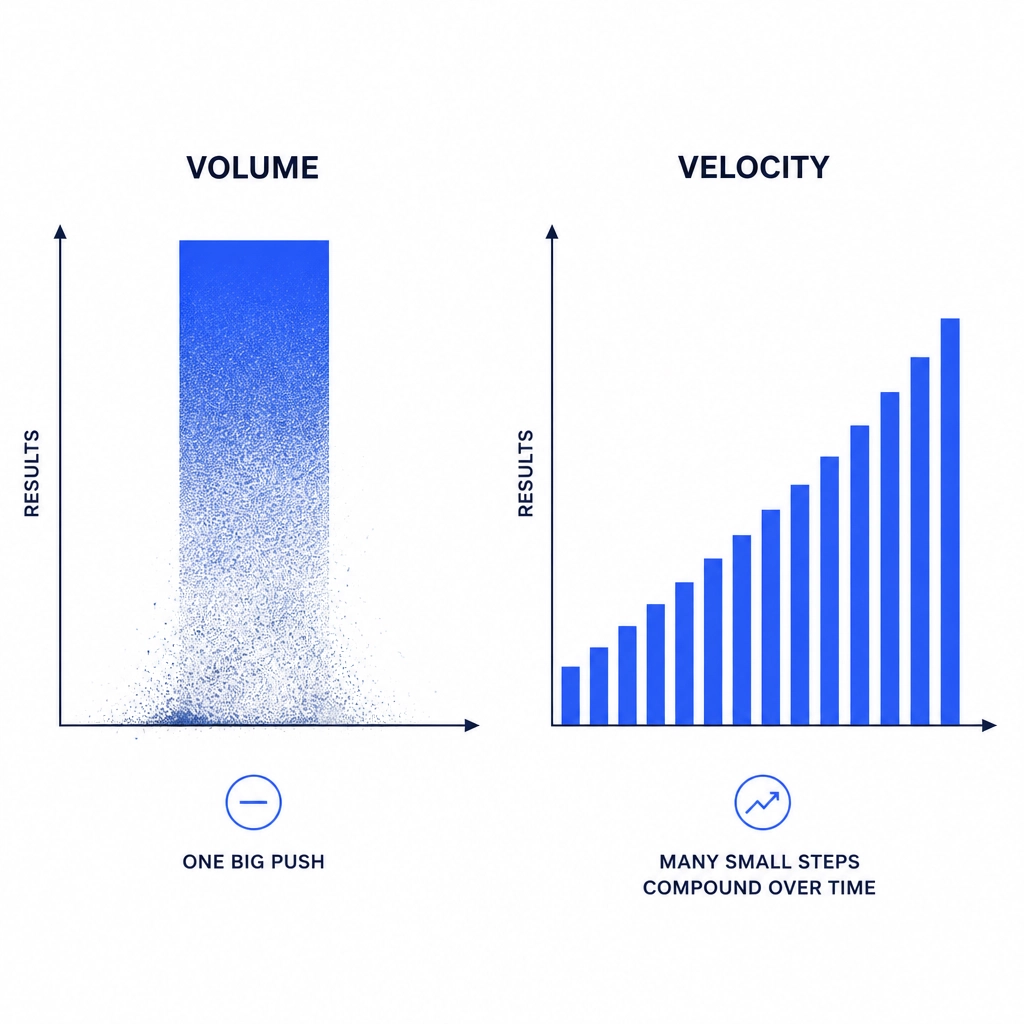
This is a mistake for two reasons: 1. Consumer Trust: When a savvy customer sees 50 reviews in May and nothing in June or July, it looks suspicious. It looks like a manipulated "push" rather than a natural reflection of good service. 2. Algorithm Favouritism: Google’s search algorithm (and newer AI-driven search tools like Gemini) prioritises Review Velocity: the rate at which you gain new reviews. A steady trickle of 2-3 reviews per week is far more valuable for your local ranking than a single flood of 100 once a year.
Maintaining a consistent flow ensures you stay within that 90-Day Trust Window at all times. It signals to both humans and bots that your business is active, popular, and consistently delivering high-quality results.
AI Search and the "Reputation Everywhere" Strategy
It’s not just about what people see on Google Maps anymore. In 2026, AI-powered search engines are pulling reputation data from everywhere.
When someone asks an AI assistant, "Where’s the best dental clinic near me?" the AI doesn't just look at the star rating. It reads the sentiment of the most recent reviews. It looks for keywords. It checks if the business is responding to feedback.
If your competitors are getting fresh reviews on Google, Facebook, and niche industry sites, while you’re only focusing on one platform, the AI will likely recommend them over you. This is why a "Reputation Everywhere" strategy is essential. You need to diversify where you’re collecting feedback to ensure you’re visible across the entire digital landscape.
How to Build a "Review Machine" Without the Stress
If you’re a busy business owner, the idea of constantly chasing reviews sounds like a nightmare. You have a business to run; you can't spend all day texting customers.
The key is to move away from "campaigns" and move towards "processes." Review collection shouldn't be something you do; it should be something that happens.
Here is how you maintain velocity without the manual labour:
- Automate the Ask: Don't rely on your staff to remember to ask for a review. Use a system that automatically sends a request via SMS, email, or WhatsApp immediately after a transaction or service.
- Lower the Friction: The easier it is to leave a review, the more people will do it. A single-click link that takes them directly to the review box is the difference between a 1% and a 10% conversion rate.
- AI-Powered Responses: Responding to reviews is just as important as getting them. It shows you’re listening. Using tools like YourReviews to generate professional, personalised AI responses saves hours of time while keeping your engagement levels high.
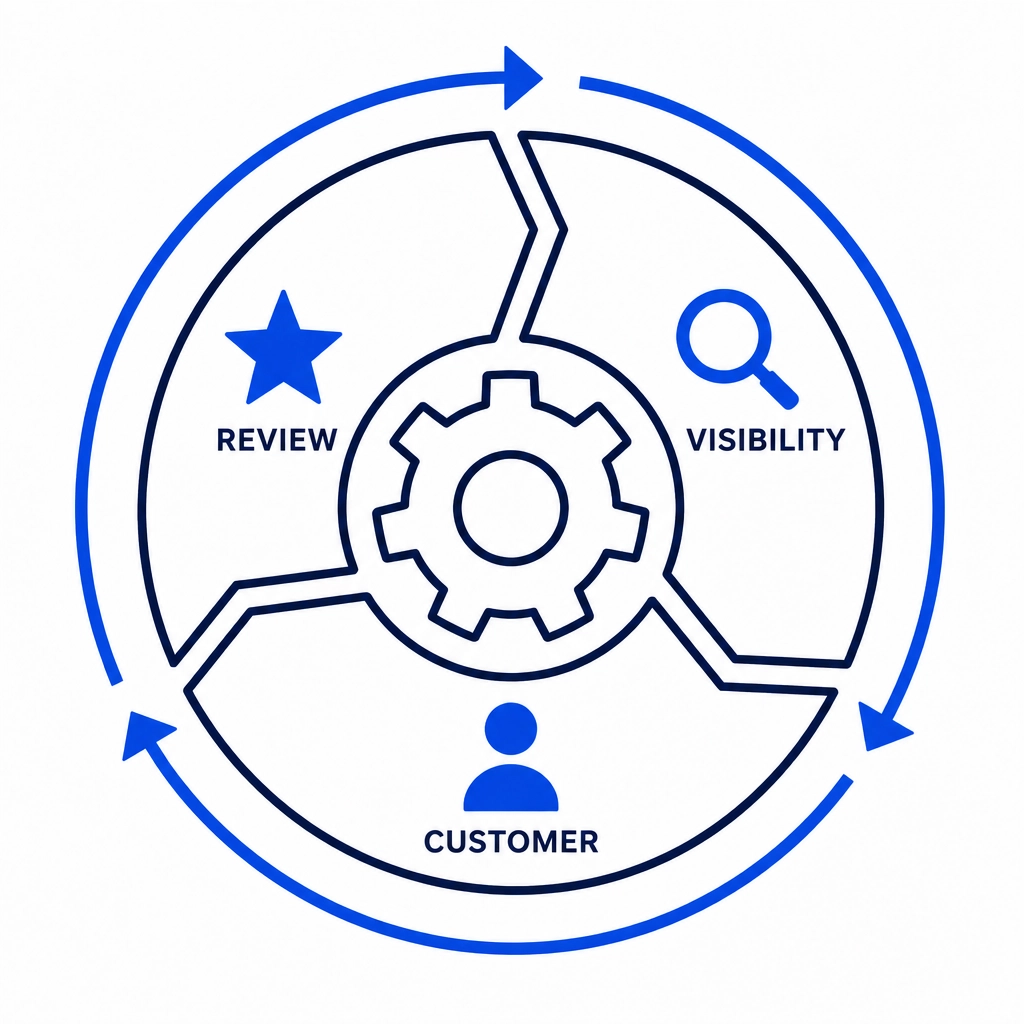
- The Flywheel Effect: Fresh reviews lead to better visibility. Better visibility leads to new customers. New customers lead to more fresh reviews.
The "Insurance Policy" for Your Business
In a tighter economy, your online reputation isn't just "marketing." It's your defensive line.
When a local customer searches for a service, they aren't looking for the business that was great three years ago. They are looking for the business that is great right now. By focusing on the 90-Day Trust Window and prioritising review velocity over total volume, you ensure that you are always the obvious choice.

If you haven’t checked your "freshness" lately, take a look at your listing. If your top three reviews are older than 90 days, you’re likely losing customers to a competitor who has figured out the consistency game.
It’s time to stop looking at the "Total Reviews" number and start looking at the date on the last one. That’s where the real profit is. For more tips on maintaining your local search visibility, have a look at our guide on Google Business Profile freshness.